The College Debates and Discourse Alliance closed out 2025 with its most robust roster of campus and classroom events to date. During the Fall semester, our team members were constantly on the road, leading or assisting debates, dialogues, and workshops at flagship universities, four-year public and private institutions, and community colleges. The entire academic year saw the launch of…
- 190 events across 69 institutions
- 52 Braver Campus Dialogues
- 134 Braver Angels College Debates
- More than 7,200 students, faculty, and community members engaged with our programming.
Each event reaffirmed a growing appetite for healthier civil discourse across higher education, signaling that students and faculty reap profound benefits as they engage in this work. Our upcoming 2025 Annual Report will provide a comprehensive picture. In advance of its release, the following are testimonials from several campus partners and members of our own team, drawn from recent experiences on the road.
Where: Piedmont Virginia Community College – 11/17/2025
Debate topic: Genetic engineering: Just because we can, should we?
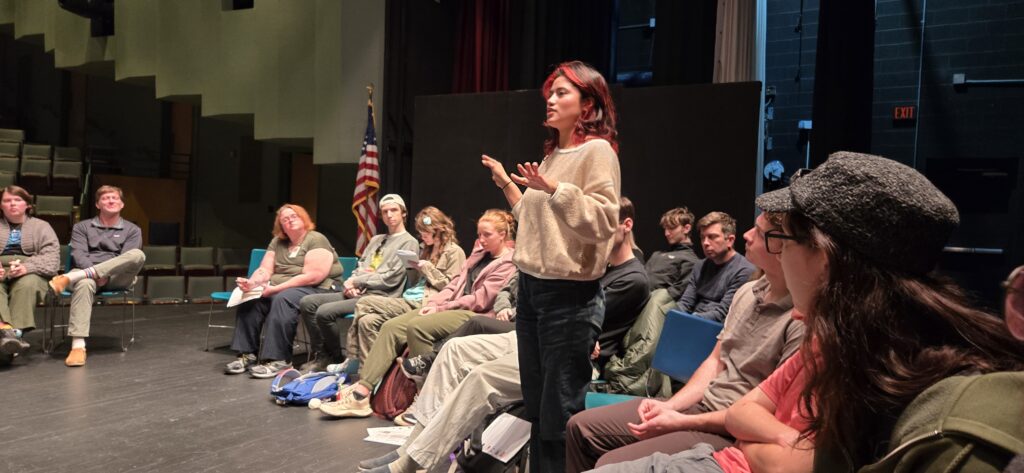
Everything changed after I completed a CD&D faculty training workshop at Virginia Military Institute in 2024. That experience reshaped how I facilitate dialogue. Students began engaging in deeper, more wide-ranging conversations grounded in curiosity and mutual respect. Diverse viewpoints emerged and were met with thoughtful listening. What distinguished these conversations was the atmosphere of openness the Braver Angels debate framework created. The classroom became a space where students asked clarifying questions, treated disagreement as a learning opportunity, and communicated in ways that made everyone feel seen and heard. These conditions enabled civil and productive exchanges.
Our recent debate on human genetic engineering touched on a range of sensitive and emotionally charged topics. Students grappled with questions about “playing God,” the moral and scientific complexities of when life begins, and the balance between parental autonomy and individual rights. They also confronted difficult issues related to abortion, as well as historical and contemporary concerns about eugenics and equity in biotechnology. Throughout the dialogue, students listened, asked questions, and challenged one another to express their ideas with greater precision. The result was a civil, thoughtful exchange that deepened understanding of complex scientific concepts and surfaced a wide range of personal beliefs, concerns, and hopes about the future of biotechnology.
Civil discourse skills help students become citizens who can approach complex problems with nuance, communicate across differences, and contribute to solutions that are scientifically sound and socially durable. These abilities are indispensable in a world where science and technology shape nearly every aspect of our lives.”
Anne Allison, Professor of Biology and Director of Biotechnology at Piedmont Virginia Community College
Where: Wake Forest University – 11/18/2025
Debate Topic: Should political speech should ever be regulated?
The first debate at Wake Forest met and exceeded all of my expectations. The students offered compelling, nuanced arguments and consistently demonstrated civility and respect even as they disagreed with each other over fundamental questions regarding the relationship between liberty, justice, equality, and what the U.S. Constitution demands.”
Kenneth Townsend, Executive Director of Leadership and Character in the Professional Schools, CD&D Faculty Fellow at Wake Forest University
Where: University of Missouri – 11/18/2025
Dialogue Topic: What should be done to address censorship and promote free speech at Mizzou?
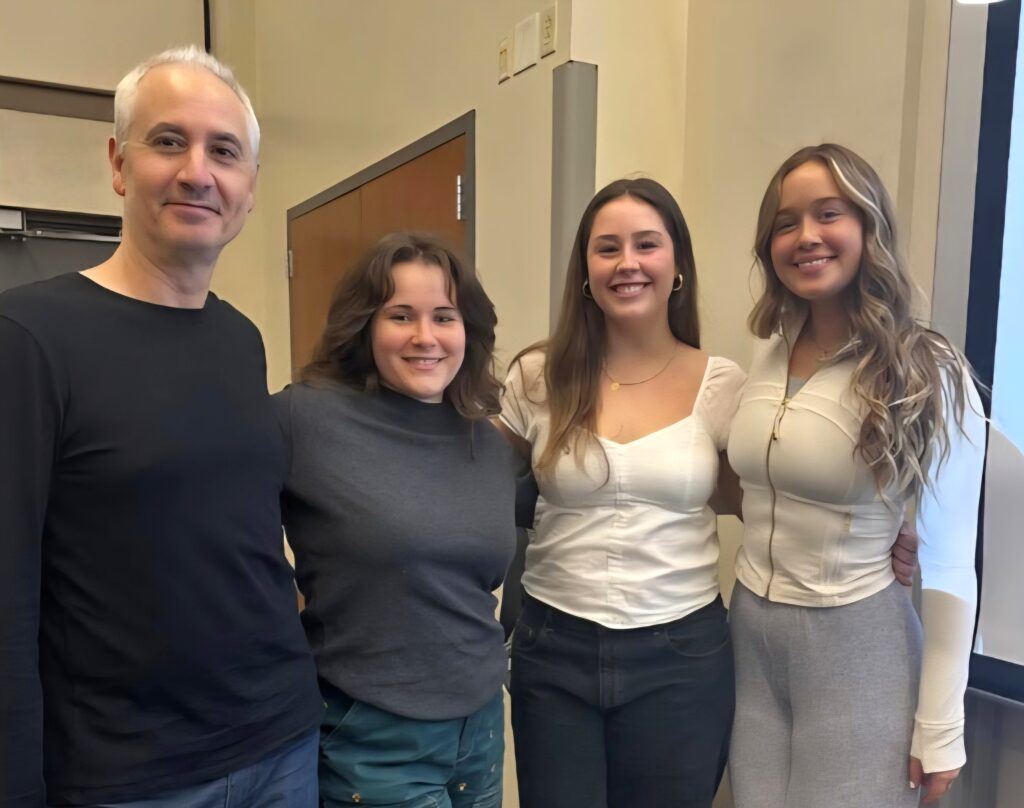
This event was organized with BridgeUSA-Mizzou and drew 60 students representing a coalition of campus organizations—Pi Sigma Alpha, College Republicans, College Democrats, Turning Point USA, Young Democratic Socialists of America, the Debate Union, and more. Students tackled questions of hate speech, political violence, and constructive accountability. Many took risks in sharing personal experiences, including difficult moments surrounding the Israel–Hamas war, and found the space unexpectedly grounding. Being able to shepherd these conversations and to facilitate moments where students get to speak from an honest place within themselves and be heard by their peers is truly special.
In our debrief, reflecting on the need for unity over partisanship, one Mizzou student said, ‘Instead of attacking each other, if we were to unite to hold each other accountable, it would be so much more powerful. I think we are more together than we think.’ ”
Mae Rum, CD&D Program Coordinator
Where: Yale University – 11/18 and 11/21/2025
Topic: How can we overcome ‘self censorship’ and foster a culture of free expression on campus?
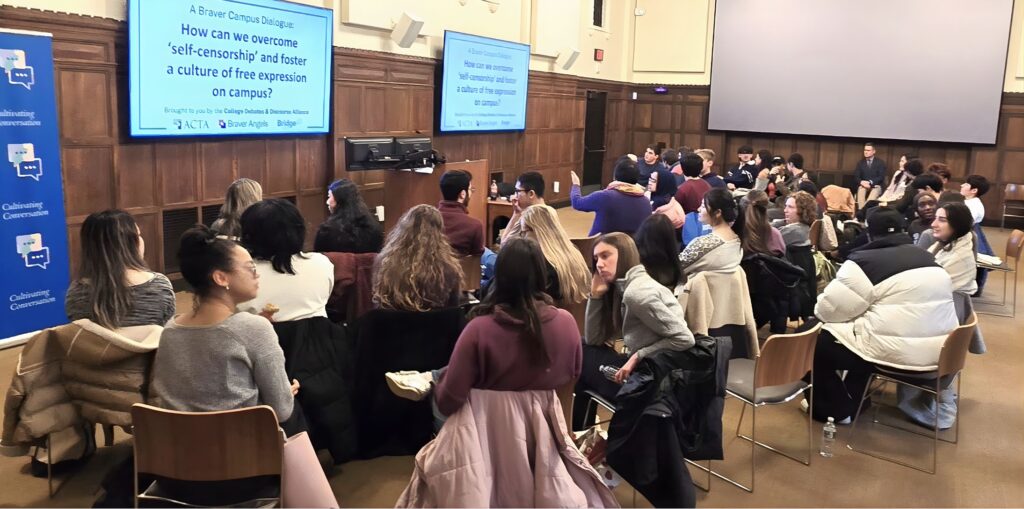
CD&D’s new A Braver Campus Dialogue (ABCD) model extends the strengths of the debate format into more intimate, story-based dialogue experiences. Our Cultivating Conversation fellows at Yale worked with two seasoned CD&D chairs, Doug Sprei and Sadie Webb, to discuss the question, ‘How do we overcome self-censorship and foster a culture of free expression on campus?’ Our fellows found the format conducive to opening up lines of inquiry and discussion that are too often avoided on campus. They were able to share personal stories and formative experiences that shape why they believe what they believe.
As an Executive Board member of the International Listening Association, I can affirm that this approach reflects best practices in relational listening, curiosity-driven exploration, and the creation of psychologically safe learning environments. In a time when distrust, political division, and self-censorship threaten the core mission of higher education, CD&D provides campus communities with tools that are both urgently needed and profoundly effective. They not only strengthen civic discourse but also cultivate the habits of mind—listening, humility, curiosity, and collaborative problem-solving—that prepare students for democratic life and for flourishing in a diverse society.”
Annie Rappeport, Associate Director of Community Dialogue, Restorative Practices at Yale and the Office of the Secretary & Vice President for University Life, Yale University
WHO WE ARE
Launched in 1995, we are the only organization that works with alumni, donors, trustees, and education leaders across the United States to support liberal arts education, uphold high academic standards, safeguard the free exchange of ideas on campus, and ensure that the next generation receives an intellectually rich, high-quality college education at an affordable price.
Discover MoreSTAY INFORMED
Sign up to receive updates on the most pressing issues facing our college campuses.