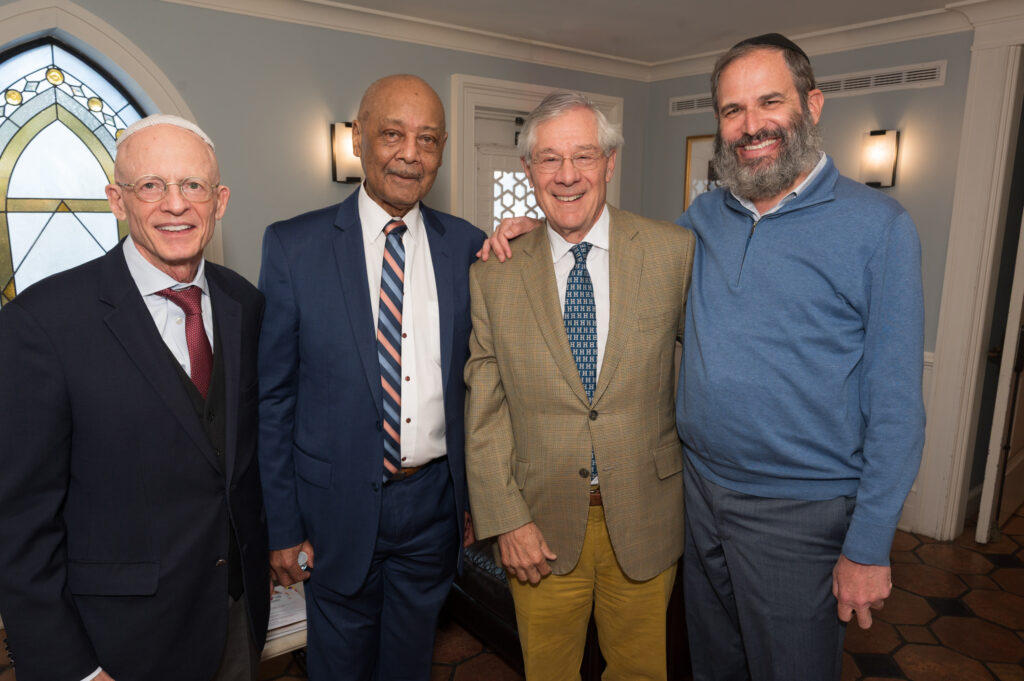
ACTA mourns the death of Robert Woodson on May 19, 2026. There is no single word that describes him better than “humanitarian”. He was a distinguished civil rights leader, author, and educator, but what has made his work to help underprivileged communities so uniquely valuable is a focus that goes beyond material needs to embrace human dignity, self-reliance, and moral growth. It is love for humanity writ large.
The Woodson Principles, set forth in his 2020 book, Lessons from the Least of These, guided his actions, his contributions to America’s progress, and his messages and admonitions to others. The Principles encompass the personal ethics of Integrity, Resilience, Transparency, Agency, and Grace, as well as pragmatic imperatives such as Competence, Innovation, and Access. He drew inspiration from the biblical story of Joseph and Pharaoh, seeing it as a metaphor for the grassroots community efforts the Woodson Center encouraged and enabled. Joseph did not retreat into self-pity and helplessness when he was sold into slavery and later falsely accused and imprisoned. Mr. Woodson’s 1998 book, The Triumphs of Joseph, is a clarion call to support the modern-day Josephs who reject bitterness and heal their communities. It is also a stern indictment of the self-promotion too often seen among bureaucrats and agencies that hamper and ignore the effective Josephs.
For more than sixty years, Mr. Woodson succeeded in bringing positive, lasting change to communities torn by intergenerational poverty, gang violence, and drugs. He received a MacArthur Foundation “Genius Grant” and, in 2008, both the Bradley Prize and the Presidential Citizens Medal.
A veteran of the civil rights movement and founder of the Woodson Center, he had an unshakable love for America. He challenged all Americans to reject cynicism and division in favor of personal responsibility and the enduring promise of the American experiment.
Through the vision and generosity of ACTA Director Paul Levy, ACTA had the privilege of welcoming Mr. Woodson this past February to our Levy Forum for Open Discourse at the Palm Beach Synagogue. Analyzing the contributions of Julius Rosenwald and Booker T. Washington in founding nearly 5,000 schools for black children in the American South, he held it up as a vivid example of what he called “The Secret of Resilience and Empowerment.” In his discussion, he also emphasized the importance of solidarity across differences and reminded listeners that human flourishing depends upon recognizing the value and potential of every individual. What came through at every moment was his warmth, his gentle humor, optimism, and faith that we can make things better.
During the 1950s and 1960s, at a time of profound racial tension and social upheaval, Woodson consistently called Americans toward reconciliation grounded in truth, faith, and shared citizenship. Decades later, when The New York Times’ “1619 Project” advanced a deeply pessimistic account of the American founding, Woodson forcefully argued that it “disparages the American Revolution and Declaration of Independence and insists that America is hopelessly racist”—a view he firmly rejected.
At a time still marked by growing hostility between racial, religious, and political communities, Robert Woodson’s example is more necessary than ever. His legacy lives on in the countless lives he changed, the individuals and communities he empowered, and in the conviction that education is essential to human flourishing and national unity.
He ends his introduction to Lessons from the Least of These with the admonition, “Now, let’s get on with the work that needs to be done.” That is the quiet but firm voice of Bob Woodson that we so cherish.
ACTA extends its deepest condolences to his family, friends, colleagues, and all those inspired by his extraordinary life and work.
WHO WE ARE
Launched in 1995, we are the only organization that works with alumni, donors, trustees, and education leaders across the United States to support liberal arts education, uphold high academic standards, safeguard the free exchange of ideas on campus, and ensure that the next generation receives an intellectually rich, high-quality college education at an affordable price.
Discover MoreSTAY INFORMED
Sign up to receive updates on the most pressing issues facing our college campuses.