In the spring of 2022, I was a doctoral candidate and graduate instructor at the University of Missouri, preparing to teach Political Public Address for undergraduates. Having developed and taught the course previously, and with graduation in the not-too-distant future, I wanted to make this particular section the best iteration yet, and as worthwhile as possible for my students. Most of all, I wanted to help my students engage constructively on controversial political topics that would inevitably come up in a post-2020, post-pandemic environment.
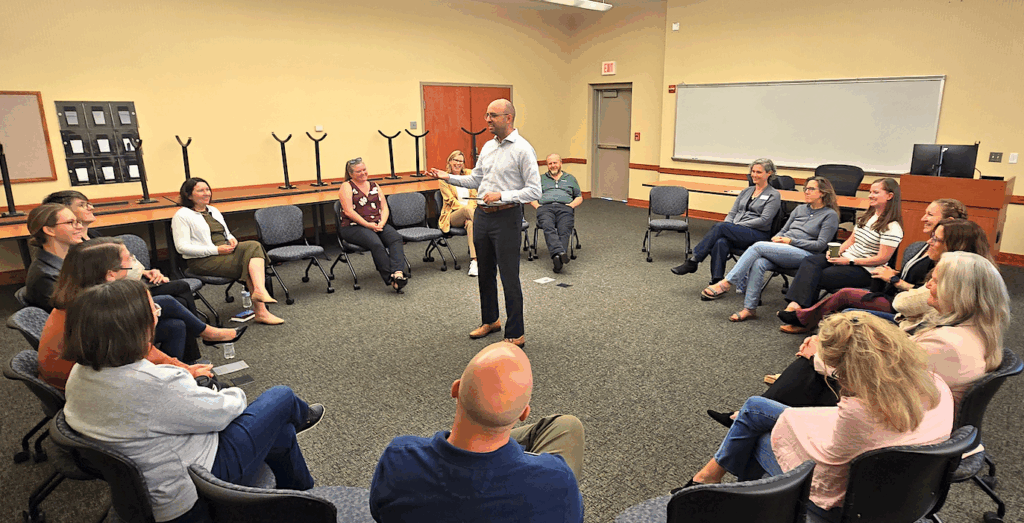
One day, as I was checking my inbox, I came across an announcement for a new Curricular Toolkit developed by the College Debates and Discourse (CD&D) Alliance. It promised to provide resources for bringing depolarizing debate into the college classroom and invited professors and instructors to try it out. Intrigued, I reached out to learn more. I soon found myself in conversation with the CD&D national team and was quickly sold on the Toolkit’s potential for facilitating robust, respectful debate. With their support, I integrated a debate and relevant assignments into my syllabus and Canvas course shell. We ran the debate later in the semester as a sort of “capstone” experience for the students. We held it on Zoom, with CD&D program director and co-founder Doug Sprei joining us to chair it.
The result?
It was a hit! Students loved the opportunity to develop a debate resolution together and share their authentic views on a challenging topic—in this case, whether social media companies should regulate content on their platforms. Passion, critical thinking, and respect were all present throughout the debate.
As one of my students, Rianda Wenther (Class of 2022), put it: “Participating in a CD&D debate during my senior year of undergrad was an enriching and formative experience, one that I wish I had discovered earlier in my academic journey. These debates help serve an essential function of our democratic society by fostering an environment where we can challenge and be challenged by each other’s beliefs in a constructive manner. This experience solidified my own beliefs while also expanding my understanding of others’ perspectives.”
She continued:
“Engaging with my peers in this structured and respectful format was an eye-opening experience. It not only enhanced my ability to think critically and communicate effectively but also prepared me well for the seminar classes in my Master’s program. In these classes, we often dissected and debated complex topics, such as military intervention overseas or social policy interventions, with the same level of depth and civility that CD&D promotes. Since participating in that debate, I’ve carried the lessons with me and have been able to apply the insights and communication skills I gained in countless other settings, from discussions with friends and colleagues, academic environments, even everyday conversations with strangers.”

Since participating in that debate, I’ve carried the lessons with me and have been able to apply the insights and communication skills I gained in countless other settings, from discussions with friends and colleagues, academic environments, even everyday conversations with strangers.”
Rianda Wenther
Like this student, I was deeply impressed and affected by the CD&D format. So much so, in fact, that I would eventually apply for a job at ACTA, the home of CD&D, find myself working there shortly thereafter, and one year later, become a member of the CD&D team itself, with special oversight of the very Toolkit where it all began.
As one of the first people to utilize the CD&D Curricular Toolkit in the college classroom, I feel a special connection to it and to fellow educators who come to see its value and utility for student learning and engagement, not to mention depolarization. Building on that pedagogical affection and experience, the rest of this piece centers on the Toolkit’s development and track record, as well as faculty perspectives on its application in the classroom.
The origin of our Curricular Toolkit dates back to 2020. Amid the COVID-19 pandemic, colleges and universities nationwide moved their courses online. While converting his traditional courses to virtual platforms, Mark Urista, an instructor at Linn-Benton Community College (LBCC), sought ways to keep his students intellectually engaged. From his work in the civil discourse space, Mark remembered learning about a special type of debate format in which participants share their authentic, personal views on controversial topics and seek to understand different perspectives. This format, he thought, could be a great way to hold debates in class and engage students in productive discussions from a distance. He eventually met ACTA’s Doug Sprei, who co-founded the CD&D Alliance—at the time, a relatively new initiative.
Upon learning that the CD&D debate format—a Braver College Debate—hadn’t yet been used in a college classroom, Mark wondered, ‘Could it be done? ‘Why not give it a try?’ He did, and the results were highly encouraging. By the end of 2021, he had organized 11 Braver College Debates at LBCC, which Doug and other CD&D members chaired online. Students who were accustomed to meeting in-person engaged very effectively via Zoom while debating a host of challenging political and social issues, including COVID-19 vaccine mandates and the merits of online instruction.
Mark’s involvement aligned fortuitously with a generous grant from the Arthur Vining Davis Foundations, which supported the development of a Toolkit that would help faculty create and implement rigorous class assignments using the CD&D debate format. When he was asked to join the project, Mark enthusiastically accepted, and soon afterward brought in another faculty collaborator, Dr. Whitney Gent, associate professor at the University of Nebraska–Omaha. Together with the CD&D team, they developed the first version of the CD&D Curricular Toolkit—with Mark’s own Toulmin model debate assignment serving as inspiration for the sample rubrics and brief templates.
“It was important to create a toolkit because the CD&D debate format, while powerful, sometimes prompted participants to question the accuracy of a statement or claim and presented a need for evidence supporting different points of view,” Mark commented. “The toolkit requires students to do research and not just provide anecdotes. A good argument is ultimately evidence-based, supported by credible sources.”
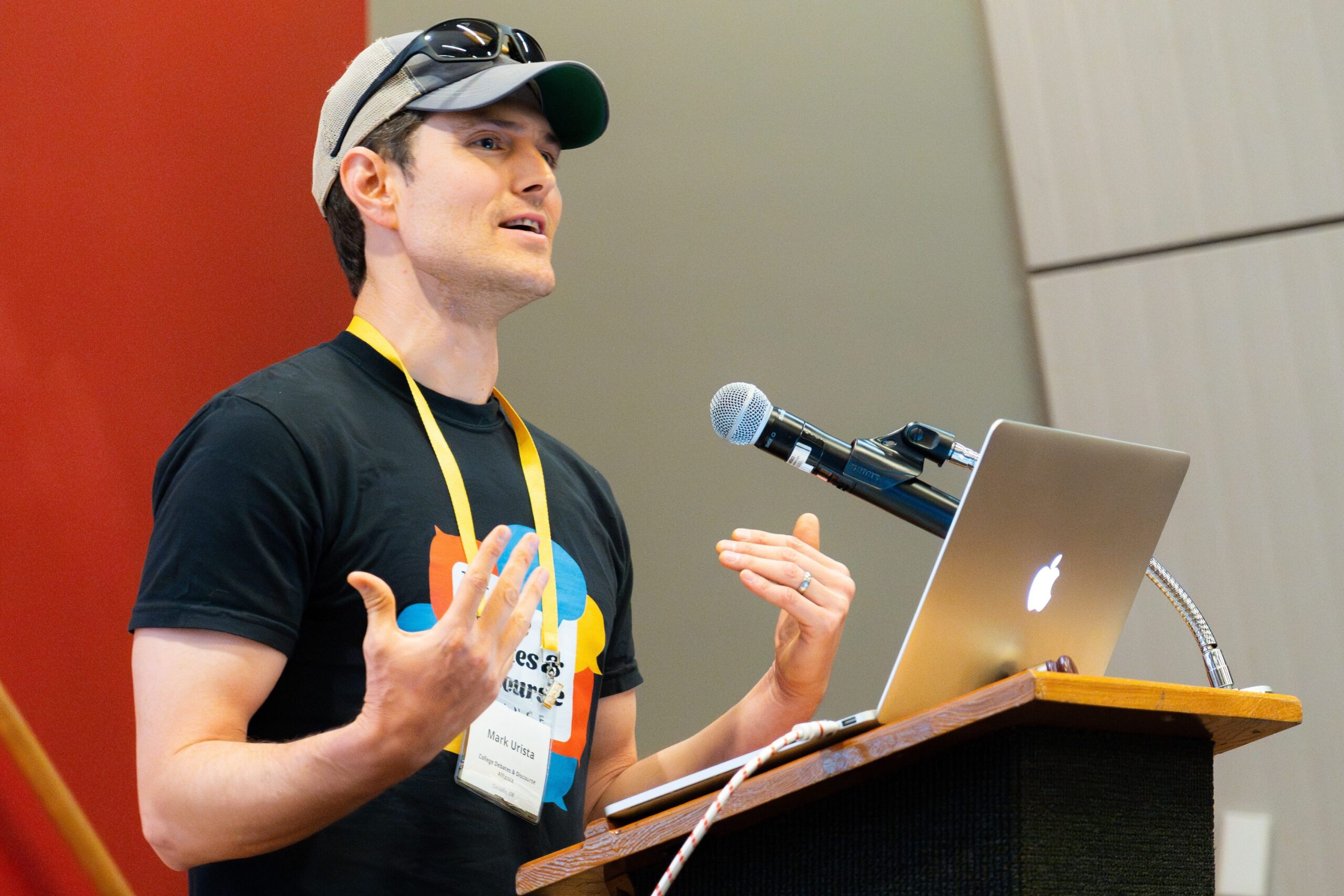
The toolkit requires students to do research and not just provide anecdotes. A good argument is ultimately evidence-based, supported by credible sources.”
Mark Urista
“What I’ve liked most about the toolkit in the classroom is the preparation that it helps students have before a debate. The toolkit forces them to do more research on points of argument and even refine their points.”
Following the Toolkit’s release, Mark assumed leadership of LBCC’s Civil Discourse Program with students and participated in a major CD&D research project funded by the John Templeton Foundation. In the process, he oversaw the formation of a remarkable intercollegiate community of civil discourse practice in Western Oregon. His efforts ultimately paved the way for many other faculty to learn about the Alliance and use the CD&D Curricular Toolkit to bring transformative debates and dialogue into their classrooms.
Since its release in 2022, and two editions later, the Toolkit has had more than 1,200 unique downloads, approximately three-fourths of which have come from individuals in higher education. The CD&D team has conversed, consulted, and collaborated directly with several of these individuals, including faculty in implementing classroom debates and dialogues. Accounts from these faculty on using the Toolkit are both informative and inspiring.
Dr. Jennie Keohane, associate professor at the University of Baltimore, was already thinking about how to make debates work well in her classroom when she saw a post from Whitney, an old graduate school friend, announcing the release of the CD&D Curricular Toolkit. She downloaded it immediately and got in touch with the team to learn more.
“Using the Toolkit was really about building confidence in myself as an instructor to break out of the way I’ve been teaching debate so far,” Jennie said. “The sample debate brief and rubrics helped me 1) see what a class assignment could look like, and 2) redesign my templates to match the spirit of the CD&D debate style and support my students as they started their journey into research and persuasive argument.”
Over time, Jennie adapted the Toolkit resources to suit her course objectives and student learning outcomes. “Using the Toolkit hasn’t made my job harder,” she remarked. “It has enhanced what I’m already doing, helping my students feel more comfortable and confident in their research, public speaking, and critical thinking. I’ve been able to adapt the Toolkit easily to my own rubrics and online course shells.”
Dr. Sanne Rijkhoff, associate professor at Texas A&M University-Corpus Christi, also already had ideas for classroom discussions in Fall 2021 but lacked a structure to implement them. With support from the CD&D Alliance and Braver Angels Central Texas Alliance, Sanne combined the structure provided by the debate format with her own pedagogical vision.
“The biggest obstacle that students face in the classroom is their hesitancy to speak up,” she said. “The Toolkit makes it so that students are better able to express themselves. It serves as a handrail, a guide for them throughout the process. While they might still be anxious before the debate, they know that they will be okay as they follow the steps outlined in the Toolkit materials. Being developed by faculty and an actual organization in the higher education space, it has legitimacy and credibility, and it’s professional. The pedagogical advantages of using the Toolkit are numerous.”
Many students who took part in the classroom debates came back to thank her: “It has prepared them for job interviews, other presentations, and even talking with friends. In hindsight, they see how beneficial it is to them. Ultimately, it is about talking and sharing perspectives, not about having the best, most researched speech. The experience helped every one of them to be heard.”
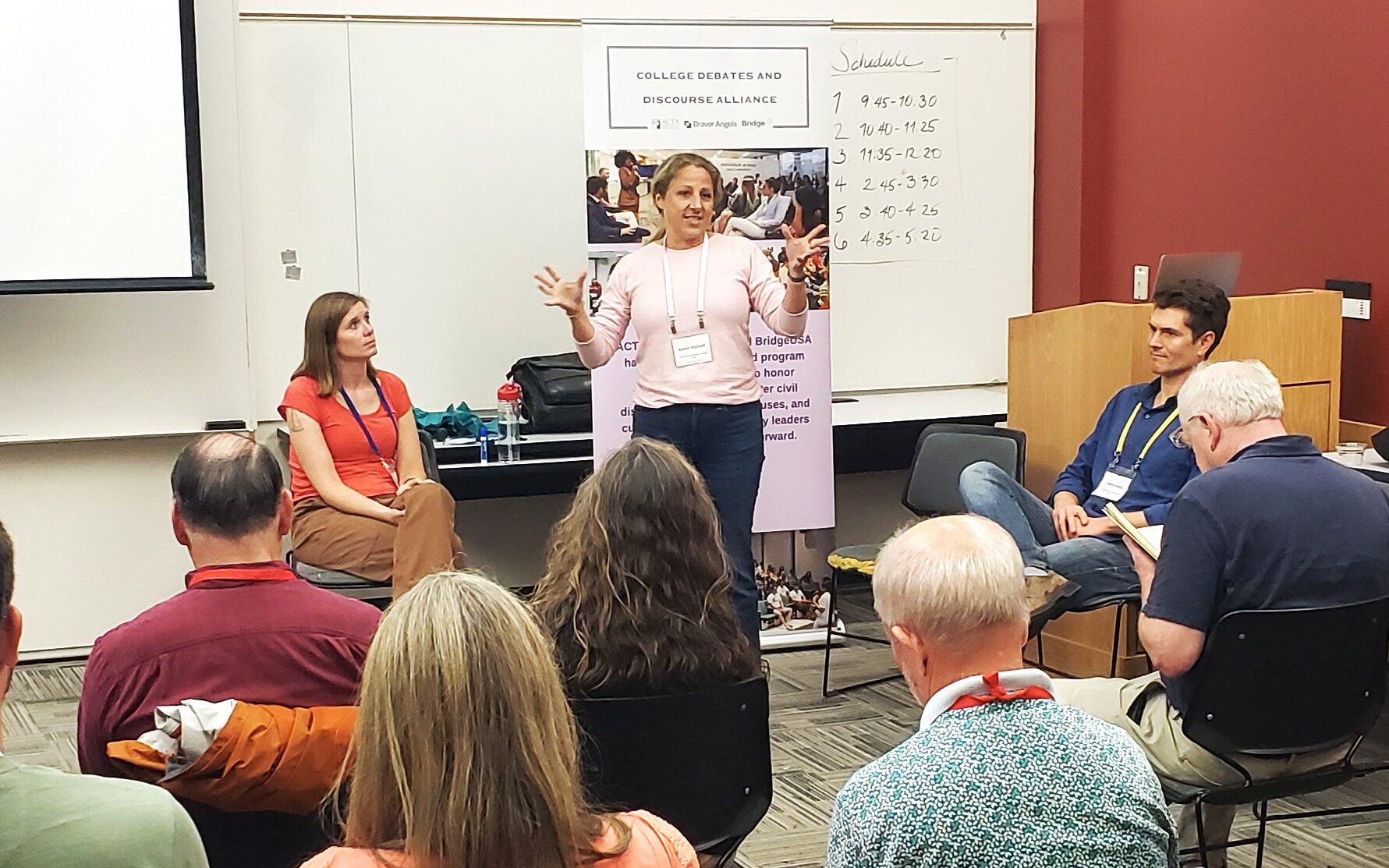
Being developed by faculty and an actual organization in the higher education space, it has legitimacy and credibility, and it’s professional. The pedagogical advantages of using the Toolkit are numerous.”
Dr. Sanne Rijkhoff
Dr. David Wright, a senior research scholar at North Carolina State University, demonstrates the Curricular Toolkit’s interdisciplinary capacity and functionality. For years, he has taught a computer science course called Ethics in Computing, which explores ethical theories and practices for computing professionals. In 2023, he learned about the Toolkit and felt that it could be a powerful tool to engage his students in conversation on the challenges and controversies surrounding technology and society today. In Fall 2023, David conducted not one, but 18 debates across his two large sections of Ethics in Computing. He has continued to hold debates in subsequent semesters (including Spring 2026), scheduling at least seven debates in each course section he teaches. To date, he has held 153 classroom debates, involving approximately 1,200 students over six semesters (or three academic years).
“I was looking for a way to get students more engaged in the classroom discussions,” David said. “I wanted to help my students engage and dig deeper into the issues, rather than stand up in front of the class and lecture the whole time. I had read about a debate that took place at NCSU. The style and structure of it fascinated me. . . I basically used the rubric from the Toolkit and have adapted it over time. The big thing for me was getting students involved in talking about the issues they are going to experience as they graduate from college and enter professional practice.”
For David, the Curricular Toolkit aligned seamlessly with his teaching philosophy:
“My goal as a teacher is to help students think more broadly, challenge their own beliefs, and be able to defend what they believe in in a way that they can find common ground with other people. If you’re just stating your opinion and expecting people to be either with you or against you, it’s very hard to find common ground and start a conversation. But if you can share what you believe and offer clear reasons as to why, then you can focus on building common ground and learning from each other.

“I want each student to formulate a good argument for a position that they are taking on their own, and do so in an open and logical way that can be a foundation for discussion rather than a screaming match. That’s one thing that I think has been missing in higher education even when I was an undergraduate at the turn of the century. I didn’t feel like there was an opportunity to have open conversations about important issues. The things that we talk about in my Ethics in Computing course aren’t as controversial as abortion or the death penalty, but they are issues that the next generation of computing professionals are going to have some control of, such as who owns healthcare and social media data, the ethical responsibilities that come along with that, and the role of the computing professional in that ecosystem.”
Like David, Dr. Jamie Lennahan, professor at Germanna Community College (GCC), became a fast, enthusiastic adopter of the CD&D Curricular Toolkit. Jamie learned about the Toolkit at a Virginia Military Institute (VMI) faculty workshop sponsored by the CD&D Alliance in 2024. With support from the CD&D team, she integrated a capstone debate into her classroom (same as me). Her experience was enormously positive, punctuated by the students’ level of participation and engagement.
“I downloaded the Toolkit because I wanted to help my students practice better dialogue and discourse,” Jamie said. And she was not disappointed. “The Toolkit’s assignment templates and resources have made it easier for busy faculty like me to implement dialogue and debate activities in their courses. I found the debate brief format to be especially useful. It has helped students understand how to connect evidence to claims.”
Utilizing the Toolkit, Jamie felt galvanized to introduce other GCC faculty and staff to CD&D programming. She invited the CD&D team to run a GCC-specific faculty workshop patterned after the one held at VMI. Since then, 15 GCC faculty and staff have downloaded the Toolkit. In AY 2025-26, 11 classroom debates were held across five different disciplines: biology, English, communications, political science, and philosophy. These debates engaged 150 students, on top of two campus debates that reached 190 students.
“The Toolkit has helped and motivated so many people at GCC,” Jamie said. “Interest in CD&D programming is growing, and students, faculty, and administrators are excited to elevate civil discourse in the classroom and across campus.”
Interest in CD&D programming is growing, and students, faculty, and administrators are excited to elevate civil discourse in the classroom and across campus.”
Dr. Jamie Lennahan
From classroom experiences to campus events to intercollegiate partnerships with the University of Mary Washington, Brightpoint Community College, and Piedmont Virginia Community College, GCC is emerging as a formidable community of civil discourse practice, thanks in no small part to the Curricular Toolkit.
Dr. Melanie Escue, assistant professor at the University of North Carolina at Pembroke, is equally impressive in her use and promotion of the Curricular Toolkit. In 2024, Melanie joined the CD&D Alliance as a Lee Barnes Campus Debate Faculty Fellow, part of an expansive CD&D initiative, generously supported by the Barnes Family Foundation, to bring civil discourse programming to the University of North Carolina System. During her service, she has hosted a CD&D faculty workshop and worked with five UNCP professors to organize 20 classroom debates and dialogues.
“The Toolkit is a highly accessible and adaptable roadmap for faculty to seamlessly implement civil debates and dialogues in their classrooms and for students to have clear rubrics for evaluation,” Melanie said. “The Toolkit has served as an easily adaptable guide for a variety of faculty I have worked with – from business to sociology to criminal justice to computer science to political science!”
Like so many faculty we have partnered with, Melanie cares deeply about her students. She shares this profound observation about the Toolkit:
“The one thing I would tell faculty is if they have ever wondered why their teaching techniques are not working, think about using the Curricular Toolkit because it centers student voices. Something like this can really invigorate and inspire students, and even faculty themselves. They’ll see the hope and the magic of the technique, which gives a roadmap to magnify student voices.”
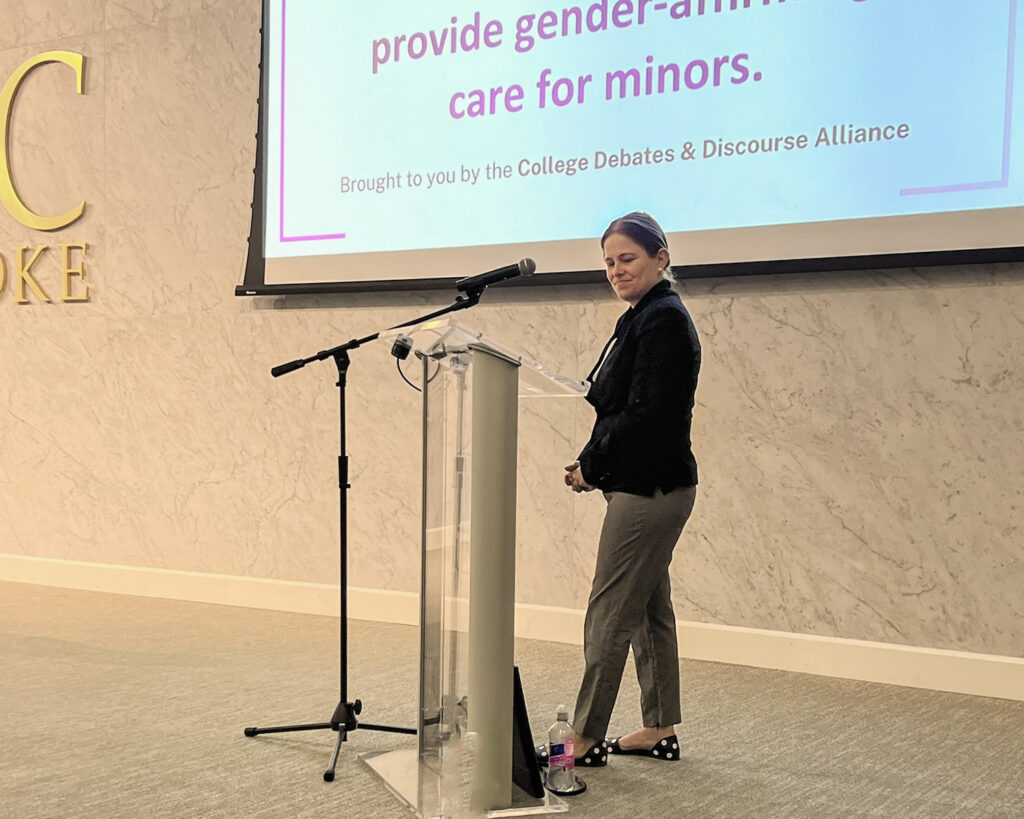
The one thing I would tell faculty is if they have ever wondered why their teaching techniques are not working, think about using the Curricular Toolkit because it centers student voices. Something like this can really invigorate and inspire students, and even faculty themselves.”
Dr. Melanie Escue
In that spirit, I’ll end where we began, with my former student’s voice:
“I firmly believe that our political leaders . . . could greatly benefit from the lessons provided by the CD&D Toolkit. Participatory governance depends on our capacity for goodwill and constructive dialogue, and CD&D is a vital initiative in cultivating these essential qualities.”
What could be a better takeaway than that, especially as we commemorate America’s 250th anniversary?
The CD&D Curricular Toolkit, designed with faculty for faculty, is available on our website. Our team members can provide support for faculty who would like help hosting their first classroom debate or dialogue.
Bryan Paul is Curricular Fellow for the College Debates and Discourse Alliance. If you would like to receive a copy of the CD&D Curricular Toolkit, contact him directly at wbpaul@GoACTA.org.
WHO WE ARE
Launched in 1995, we are the only organization that works with alumni, donors, trustees, and education leaders across the United States to support liberal arts education, uphold high academic standards, safeguard the free exchange of ideas on campus, and ensure that the next generation receives an intellectually rich, high-quality college education at an affordable price.
Discover MoreSTAY INFORMED
Sign up to receive updates on the most pressing issues facing our college campuses.